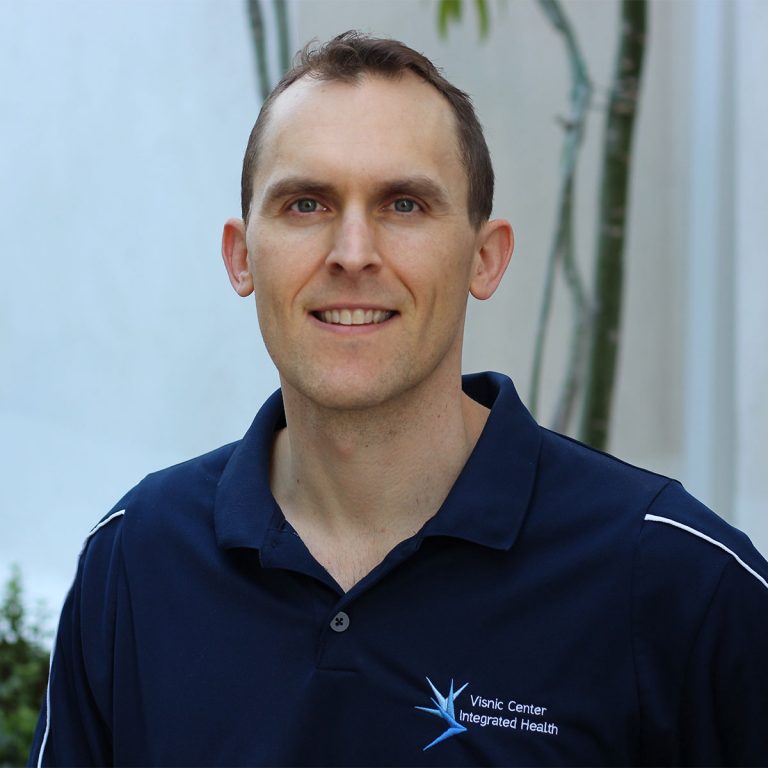
The Answer to the Question: “Sam, what do you do?”

February 10, 2010 by admin · Leave a Comment
Filed under: sam visnic 

After literally HUNDREDS of consultations over the years, and an equal amount of requests via email, I’ve decided to put together a video of what I do to explain my methodology and work. Here you go inquiring minds!


End Your Back Pain!

Learn The Methods With My FREE Online Video. Enter Your Info Below And Get It Instantly!
Name
Email
 
We will NOT share your email address, we hate SPAM too.

How To Isolate The Transverse Abdominus for Back Pain Relief

December 28, 2009 by admin · Leave a Comment
Filed under: Abdominals and Lower Back Pain 

In this clip, I’ll show you how to activate one of the MOST important muscles to address with regards to lower back pain. This muscle, called the transverse abdominus, is essentially a ‘corset’ for the spine. Dysfunction in this muscle is VERY common in individuals with back pain, and restoring its function is a key objective for reducing further episodes of pain.

Click here to get your Stabilizer Pressure Biofeedback Unit!

How to Perform an Abdominal Plank Exercise Properly for Back Pain Relief

November 25, 2009 by admin · 4 Comments
Filed under: Exercise for Back Pain 

How to Find Neutral Spinal Alignment Through Pelvic Tilting

November 24, 2009 by admin · Leave a Comment
Filed under: Pelvic Tilt 

Correction Of Forward Head Posture

November 20, 2009 by admin · 1 Comment
Filed under: Correction Of Forward Head Posture 

Part 1

Part 2

Treatment for Sacroiliac Joint Pain

October 7, 2009 by admin · 2 Comments
Filed under: Causes of Back Pain 

What is the Sacroiliac Joint?

The joint is comprised of the area in which the sacrum and iliac bones meet.

Stabilization of the SI Joint: Two Types

Form Closure

Form closure is the stability that happens when the tight fitting joint surfaces of the SI joint are close together. This is very much dependent on the size and shape of each person’s structure.

Force Closure

Force closure is the support offered to the SI joint by the ligaments and muscular systems.

Most research is is clear that no muscles directly move the SI joints, but its important to understand how their dysfunction can promote sacroiliac joint dysfunction.

Addressing Sacroiliac Joint Pain

Sacroiliac joint treatment options beyond medical interventions are quite simple, in fact. They need to be separated into 2 different scenarios:

What to do when the sacroiliac joint is OUT:

As mentioned previously, there are not any muscles in particular that move the SI joints. However, there are some movements that are useful in assisting the mobilization of the sacroiliac joints.

Unfortunately, sometimes its not possible to get the joints back into balance on your own. Many times with patients, I have to help them by anchoring certain parts of their pelvis or sacrum while they perform movements in order to re-balance the area. Therefore, its recommended to see a trained professional to help with this.

The good news is, on more than a number of occasions, someone walks into my office with sacroiliac joint pain of a 9 on a 10 scale, and within 5 minutes, I can get them down to a 2 or a 3. This just demonstrates how much potential to cause pain these joints have, AND how quickly it can be resolved by doing the right steps to resolve it.

What to do when the sacroiliac joint is IN:

Once significant pain is resolved, and sacroiliac joint inflammation is reduced, corrective exercises and stretches must be implemented in order to effectively restore balance to the muscular “slings” that support the area.

Sacroiliac joint exercises need to focus on two areas. Some of the key muscles that need to be addressed are found in two different “layers” of muscles.

The Inner Unit:

The inner unit muscles are a deep set of muscles that help stabilize your entire core and are frequently shut off, or possess inappropriate activation patterns during periods of pain. They include:

-The muscles of the pelvic floor
-The transverse abdominus
-The multifidus
-The diaphragm

These muscles must be isolated to ensure proper activation and sequencing, then integrated with the next group of muscles, called the Outer Unit.

The Outer Unit:

The outer unit is further segmented into 4 systems, but in essence, involves the following muscles:

-The gluteals (all of them)
-The spinal erectors
-The abdominal wall
-The groin muscles
-The hip flexor and quadricep muscles

The real trick to resolving any problem with back pain seems to always come back to the correction of the deep muscular stabilizer systems of the body, then re-integrating them with the larger, more powerful muscles.

If you don’t follow this sequence, your results will be limited to symptom relief for the short term. I have seen this time and again in my practice with patients who have progressed their programs too quickly just to “get stronger”.

When I end up seeing them after the many therapists they have seen prior to me, I have to take them back to the beginning anyway. In this situation, unfortunately, they have been taught to OVER activate the larger muscles, and I have to re-train them to focus on the micro-movements that need to be done.

Lesson here: Whats worth doing is worth doing RIGHT the first time!

Emotional Reasons Why Muscles Won’t Release?

September 23, 2009 by admin · Leave a Comment
Filed under: Back Pain Stretching 

I saw a patient yesterday that sparked today’s blog about an interesting issue that comes up while
performing corrective stretching programs.

Why is it that some muscles just won’t release?

First off, we must keep in mind the driving influence for muscle tension, and that is your central nervous system.

You see, your muscles are frankly quite stupid. They aren’t the “brains” behind the operation so to speak.
Your muscular system takes the cues from what your nervous system tells it to do.

However, that does NOT mean that muscles can’t have their own problems. For example, there is a close
correlation between the amount of athletic training years (or years in the gym also!) and the amount of muscular adhesions and scar tissue someone has.

Why? Well, the more years you have “beat up” your body as a result of training, you will have had strains, micro damage and so forth to your muscles.

In this situation, your muscles will respond VERY well to stretching and specific massage techniques like neuromuscular therapy applied to certain areas.

Now, back to the central nervous system. There are 2 major divisions, the Sympathetic and the Parasympathetic.

Sympathetic is the “fight or flight” aspect, while Parasympathetic is the “rest and relaxation” aspect.

Sympathetic stimulation will increase muscle tension in preparation for a potentially stressful event. This is the primary reason for the inability to get a muscle to relax.

Now begs the question, what causes sympathetic stimulation?

Thats one LONG list!

Worry
Fear
Anxiety
Restlessness
Food allergies
Digestive issues
Nutritional deficiencies
Illness
Organ distress

This is by far not an exhaustive list!

Of course, this is one of primary reasons why I address nutrition and emotional stress in my programs. It has
led to breakthroughs in some of the most challenging cases I have seen!

Soon, I’ll be coming out with some resources on how to address these factors, so keep checking back!

Sam–

Be Sure To Check Out My YouTube Page and Subscribe!

August 16, 2009 by admin · Leave a Comment
Filed under: Causes of Back Pain 

http://www.youtube.com/user/HolisticSam

“Sequence” Is The Key To Relief

June 13, 2009 by admin · Leave a Comment
Filed under: Relief From Back Pain 

Out of the myriad of factors that are involved in the process of getting results with lower back pain, one of the more important areas that I have discovered to be critical involves the ORDER in which things are done.

Here is the BEST activity that will dramatically impact the results you get from your lower back pain relief program:

1. Relax FIRST before you do anything!

I know this one may sound obvious, but it is rarely addressed. Its important to keep in mind that pain causes increased muscle tension and increased activation of the sympathetic branch of your central nervous system, the “fight or flight” part. When this happens for long periods of time, the habitual muscle tension patterns become unconscious. Basically, you aren’t aware that you are holding your body in a tense way.

By performing a relaxation-inducing activity, particularly one that involves actively paying attention to your body, you can decrease the tone in your muscles, thus allowing increased blood flow and function. One of the very best activities for doing this is a sort of meditation.

Start off by laying on your back. Close your eyes, and allow yourself to lay in the most comfortable way on your back. Start by focusing your attention on your big toe. Focus on relaxing and letting go all of the tension in the muscles in that toe. Then allow that relaxation response to spread to your other toes. Allow it to move up to the soles of your feet, then your ankles. Continue this process, muscle group by muscle group, until you have every muscle in your body completely relaxed.

Do your best NOT to fall asleep!!

After you have done this, you will have allowed the tone in your postural muscles to relax, and will get MUCH better results from your corrective stretching and exercise program!

Try it and let me know how it works for you!

–Sam

The Non-Surgical Approach To Disc Herniations: Part 3

April 22, 2009 by admin · Leave a Comment
Filed under: Herniated Disc 

Welcome back to part 3 of this special series on my non-surgical approach to disc herniations. As mentioned previously, the information in this blog is for INFORMATION ONLY. Please DO NOT attempt any movements that have not been approved by your doctor. Failure to listen to this advice could potentially cause you more pain if used inappropriately, or in use with a mis-diagnoses.

So, with that said, I am now going to introduce to you a movement that has brought me a tremendous amount of success with patients with disc herniations. I don’t take credit for this movement, originally learned through Robin Mckenzie, a renowned physical therapist who introduced flexion and extension based therapies for spinal dysfunctions.

This movement, along with what I have been talking about all along, is focused on improving extension in your spine, which is ideal for relieving pressure on spinal discs, particularly of the posterior disc bulge variety. In this video, I will explain how to perform the movement:


As you have seen, there are a few progressions to this movement. It is CRITICAL to make sure you start with the MOST appropriate level of the movement based on your pain levels and to the degree that your disc is bulging. This movement at times can create quite a bit of discomfort if done with too much intensity, even if it is the best thing for you.

When giving this protocol, I usually start off with the following protocol:

1. Lay face down for 3-10 minutes to allow muscles to relax and pain levels to diminish
2. If you feel better, then slowly begin to work yourself up onto your forearms, and relax there for 30 seconds to 60 seconds, depending on comfort.
3. You may then rest for 30 seconds, and repeat for 3-6 reps, or move to the next movement.
4. Prop yourself up onto your elbows, then repeat the procedure as outlined in #3
5. Lastly, begin performing the pushup to tolerance and/or upper body endurance, repeated for 10 repetitions.

There may be a stage between each of these steps by 1-7 days, depending on the severity of the condition. If all done on the same day, proceeding through the steps as sort of a “warm up” procedure, then each set (from 1-5) is only done once.

This procedure may be done as frequently as every hour on the hour, especially if you work at a seated postion all day, as compressive loads during sitting are one of the worst for disc bulges.

Again, this is ONLY a general outline. When using this in my practice, often times it will be INDIVIDUALIZED with EVERY patient, depending on pain levels, severity of the condition, and VERY importantly, how well they are sticking to the lifestyle outlines!

Next Page »

  • FREE Online Video on How to End Your Back Pain with Sam Visnic!

    (You can NOT buy anything here, even if you tried! Real video, not a sales pitch.)
    Stop Your Back Ache
    Name
    Email
     
    We will NOT share your email address, we hate SPAM too.
  • Click Here To Learn About My Back Pain Relief DVD System!

    End Your Back Pain Now


  • Dr. Holly Lucille

    "Having someone like Sam to refer my patients to who is as comprehensive, brilliant and caring as he is makes my job so much easier!! I feel assured that my patients are in good hands and are going to get the results they so desperately want. I highly recommend Sam to anyone who is looking to resolve their back pain easily and effectively!”
    -Dr. Holly Lucille N.D., R.N.

  • “Sam is very knowledgeable about back pain and the process for relieving pain. His approach is grounded in science and experience. Sam's holistic approach is geared towards treating the causes, not just the symptoms. If you are experiencing lower back pain I highly suggest you contact Sam.” -Perry Schroeder
    Real Estate Agent
    Los Angeles, CA

  • Jimmy

    “I've used Sam on more than one occasion to help me with back pain issues. As a full time web designer I often spent too many hours sitting behind the pc which led to chronic back pain. I started working with Sam a few years ago and his knowledge and insight helped me to alleviate my back pain issues and even improve my posture. Whenever I start to have back pain issues I just re-implement the tools and techniques he showed to me and in no time my back pain goes away. He really is the back pain specialist!”
    -Jimmy Powell
    Owner, Stellar Media Group

  • Michelle
    “Sam is an excellent mind/body fitness coach & trainer. When it comes to eliminating complex back problems, Sam's your man. He is passionate about his work and dedicated to healing his clients. I highly recommend his services.”
    -Michelle Armstrong
    Author, "Manage Your Mind, Master Your Life"

  • Tim
    “In my experience it is rare to find a health practitioner who consistently cures the underlying issues, and successfully drives to total wellness. Sam has become our trusted family 'health support system' because he is one of those rare people. He has successfully helped my mother in law, sister, wife, daughter, and myself cure what western medicine has been unable to. We highly recommend Sam ... plus he's a cool guy !”
    -Tim Parsey
    Microsoft Partner, Dir UX

  • Dr. Matt Costantino
    “I was so impressed when working with Sam, from his detailed and thorough evaluation, to the great workouts and home exercises prescribed. I've referred a number of people to Sam and in the past we've used his DVD for gifts to patients for home care. I strongly recommend Sam's services and hope to be working with him personally at some time in the near future.
    -Dr. Matt Costantino
    HealthSource Chiropractic and Progressive Rehab